Late last year, I finally completed my English degree. After seven years of part-time study, which revolved around creating stories, I walked away from university with a very real certificate, one that could be stuck to a wall. I even got to dress up like a posh wizard for the day and meet an arch-chancellor while a brass band played the Addams Family theme. It was a surreal day.
The trouble with learning new skills is that you want to practice them. You have to keep pushing, keep expanding your knowledge for fear you’ll forget everything and have wasted the best part of £20,000. As a stoic Northerner from the North West of England, there is no way on Earth I’m spending all of that money on a degree to let it go dusty. I make it a point to set aside an hour each day to either put pen to paper and write something of my own or research the best ways to improve my stories.
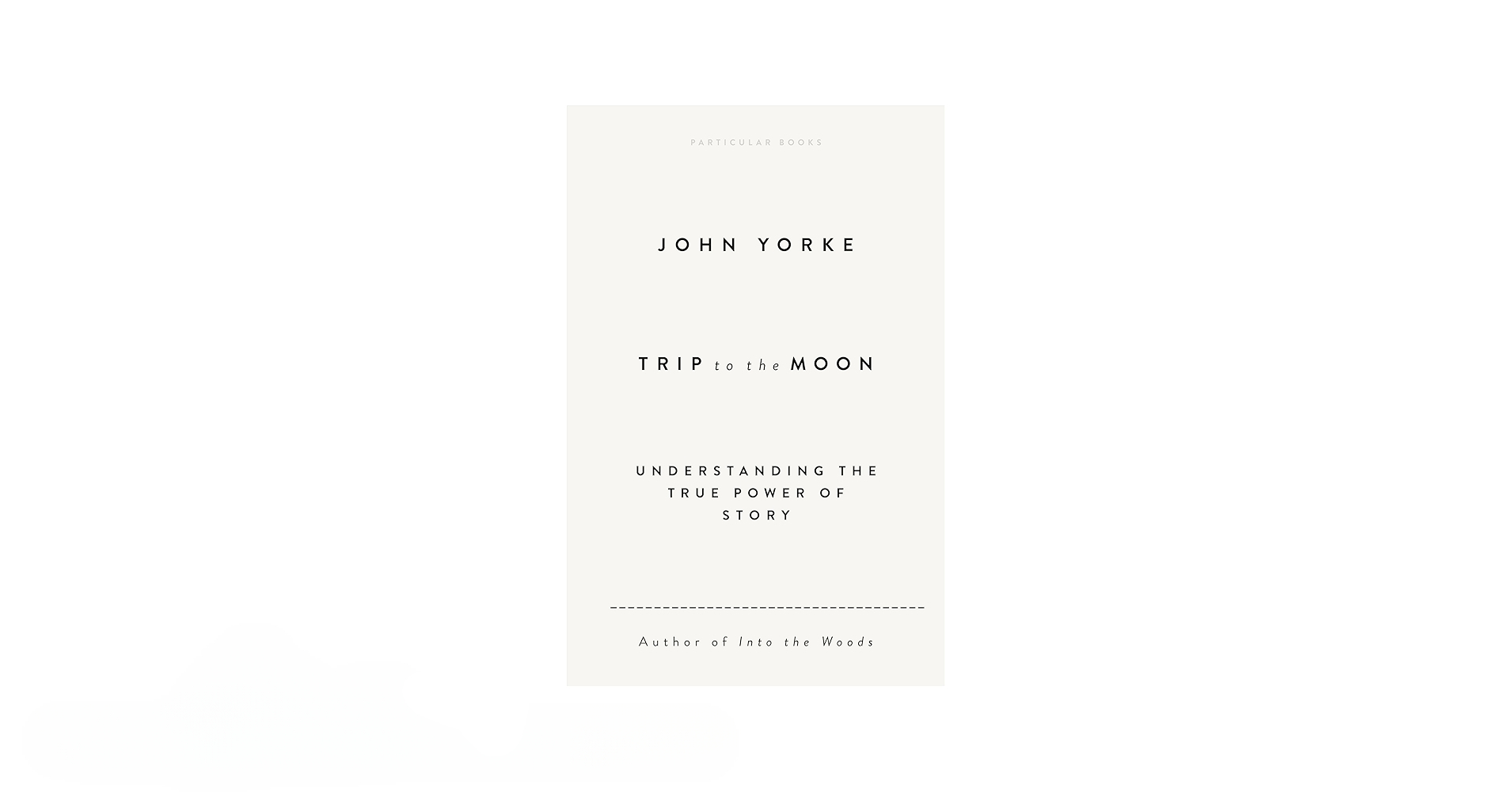
This led me to discover John Yorke’s Trip to the Moon: Understanding the True Power of Story, a forthcoming novel that aims to make you think about story structure and how it appeals to those experiencing it. Rather than being a tell-all book on how to create the perfect story, Trip to the Moon instead encourages the reader to think about aspects of their stories to enhance and entice people to stick with it. At a reductive level, the book advises looking beyond the three-part plot and asking, “Why should your viewer care about what you are trying to say?” It’s certainly an interesting approach that made me look at everything in my draft folder to see if improvements can be made.

Over the course of 300-odd pages, Yorke uses examples from film and TV, primarily because of Yorke’s past career at both the BBC and Channel 4, but rather than sticking to what he knows, Yorke explains that stories can be found literally everywhere. It feels like he took my hand and showed me the stories in political speeches that tapped into the human psyche, for better or worse. As haunting as it was to hear how stories are weaponised to suit agendas from across the political spectrum, Yorke also guided the reader across the world to highlight cultures where stories aren’t as straightforward. Reading Trip to the Moon in large chunks at a time did give me whiplash as Yorke moved effortlessly from one topic to another, not leaving much processing time between each point. Perhaps I would have been better suited to ticking off a chapter at a time, but the book was written in such a way that kept me going. There are some well-presented theories of how to bolster a story, which can be applied in almost any situation.
It’s important to set expectations with Trip to the Moon. This isn’t a self-help book to get you into screenwriting. Nor will it give you the keys to create the next Happy Valley, Adolescence or Stranger Things. Rather, by using examples and research, Yorke will point to different sources to draw his ultimate conclusion of how a good story becomes something bigger. The trouble is those sources are usually prefaced with, “as I said in Into the Woods…” This is Yorke’s previous book, in which he has already outlined most of the theory present in this new release. Thankfully, as someone who hasn’t read Into the Woods, he does give just enough information before presenting his expanded ideas. It is still annoying that so much of Trip to the Moon does rely on his previous work.
Overall, I found Trip to the Moon a solid read, it did make me think about how I approach the structures in my writings. The issues I have with the book are mainly structured around my own desire to consume the whole thing and digest it, rather than sitting on each chapter before moving on. It was slightly annoying that Yorke pointed to his previous book so much, but because he enthusiastically laid out the crib notes, this wasn’t too much of a gripe. You won’t find the answers to the perfect story in Trip to the Moon: Understanding the True Power of Story, but you will discover the small changes that can be made to elevate a by-the-numbers story into something memorable.